
Pacific Seafood Closing for Shrimp Season
Pacific Seafood's Westport processing plant will not operate during the upcoming shrimp season due to an ongoing dispute with the Washington State Department of Ecology over a wastewater discharge permit, the legal authorization the plant needs to release treated wastewater into Half Moon Bay. The plant has been in operation since 1978, and expanded to process shrimp in 2014.
Pacific Seafood says the closure, the first in the facility's history, will affect more than 40 workers and result in an estimated $25 million economic loss, with ripple effects for local fishermen and businesses that depend on the seasonal operation. The company plans to redirect shrimp deliveries from as many vessels as possible to its Oregon locations.
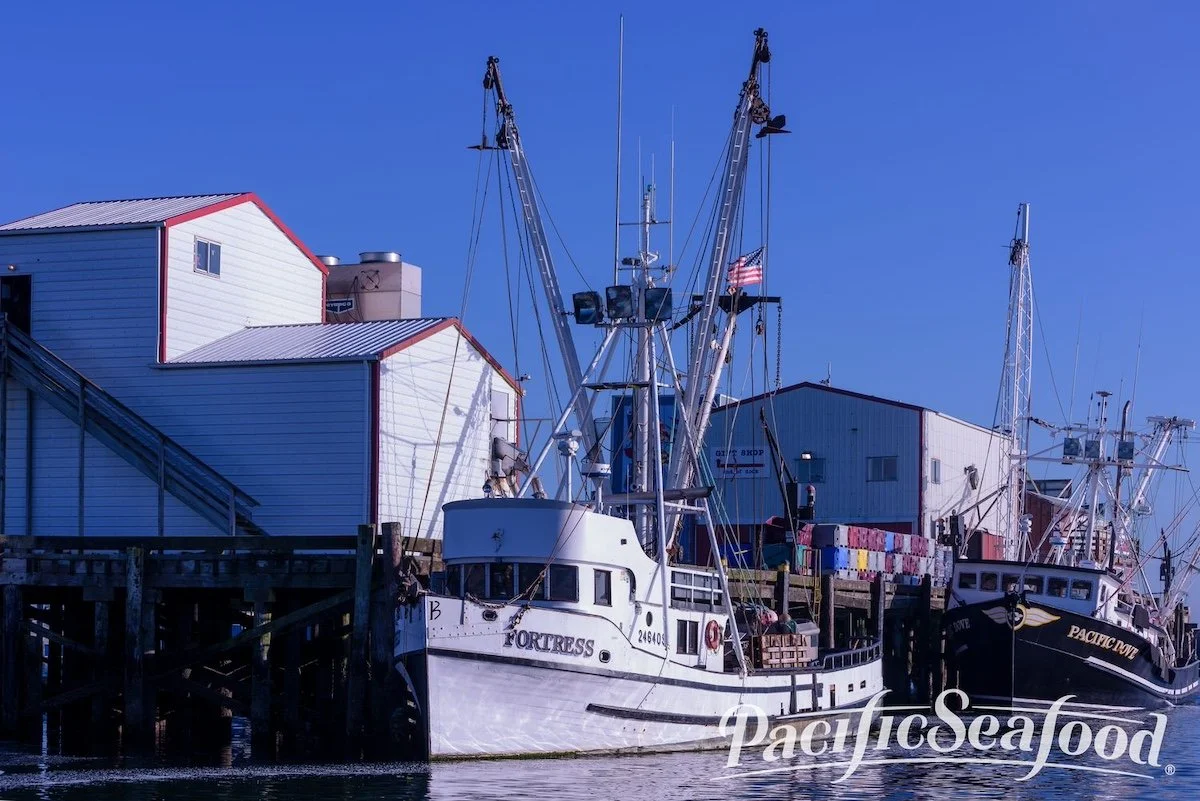
Pacific Seafoods Westport. Image provided by Pacific Seafoods
What's the Dispute About?
At the heart of the conflict is how Ecology's new draft permit defines the word "seafood." Pacific Seafood says Ecology has narrowed the definition to include only raw seafood, excluding cooked products, which the company argues conflicts with the longstanding federal definition that covers all seafood entering processing regardless of whether it's cooked. According to Pacific Seafood, this change effectively cuts the facility's allowable discharge limits in half, making normal operations impossible.
Pacific Seafood has formally requested that Ecology correct the permit to use the federally recognized definition of "seafood," one that does not distinguish between cooked and raw materials, and to calculate production limits in line with EPA and Ecology's own guidance. The company also wants the permit to include a clear process for adding new species and adjusting limits over time, and says the current draft does not align with federal Clean Water Act requirements.
To comply with the new permit, Pacific Seafoods will spend $3 million on engineering upgrades at the Westport facility. These upgrades cannot be completed before the shrimp season begins. Pacific Seafood hopes to reopen as early as 2027, but says that depends on how Ecology finalizes the permit.
The Department of Ecology says its goal is to help any permitted facility understand regulatory standards so the facilities can comply with their permit and protect water quality. They remain available to help Pacific Seafood understand how the draft permit follows EPA’s limit guidelines, and answer questions around that topic. Ecology says there is no fundamental change from previous permits, but it does add language to clarify any ambiguity in the previous permit.
Ecology clarifies, “We define the word “seafood” in the draft permit based on federal regulations (40 CFR 408.81 c), which states: “The term seafood shall mean the raw material, including freshwater and saltwater fish and shellfish, to be processed, in the form in which it is received at the processing plant.”
The Public is Invited to Comment
The public is invited to comment on the draft Water Quality Permit No. WA0003352. The comment period closes on Wednesday,March 18, 2026. All permit documents are available on the Department of Ecology's website.
Comments can be submitted by email to gayle.garbush@ecy.wa.gov or by mail: Gayle Garbush, Southwest Region Office – WQ, PO Box 47775, Olympia, WA 98504-7775
A History of Permit Violations
The dispute comes against a backdrop of repeated enforcement actions at the Westport facility:
2020: Pacific Seafood settled with the EPA for $190,000 after an unannounced 2017 inspection uncovered over 2,100 violations, including discharge-limit violations and improper reporting.
2022: Ecology fined the company $123,000 for 49 violations, including discharging wastewater with excessive fecal coliform, grease, and oils, later settled for $92,250.
2024: Ecology issued a $222,000 penalty for 58 violations, finding the facility had exceeded every pollution limit in its permit, including excessive bacteria, acidity, and oil and grease discharged into Half Moon Bay.
According to Pacific Seafoods, these violations have prompted the company to invest millions in technology and improvements to reduce wastewater impact, and as a result, the company has had a near-perfect compliance record for two years. While Pacific Seafoods doesn’t agree with Ecology’s actions, it is moving forward because it believes in Westport’s industry, fleet, and community.