
The Flyway Runs Through Here
Written By Poppy Seegle
Photos by and © Kathy Greer
Every spring and fall, enormous numbers of birds move along the Pacific Coast in one of nature's great spectacles, and some of the best viewing on the entire flyway happens right here in Grays Harbor. This Sunday is World Migratory Bird Day, an annual event to raise awareness about migratory birds and the habitats they depend on. While peak migration coincided with last weekend's 30th Annual Shorebird Festival, the birds haven't left.
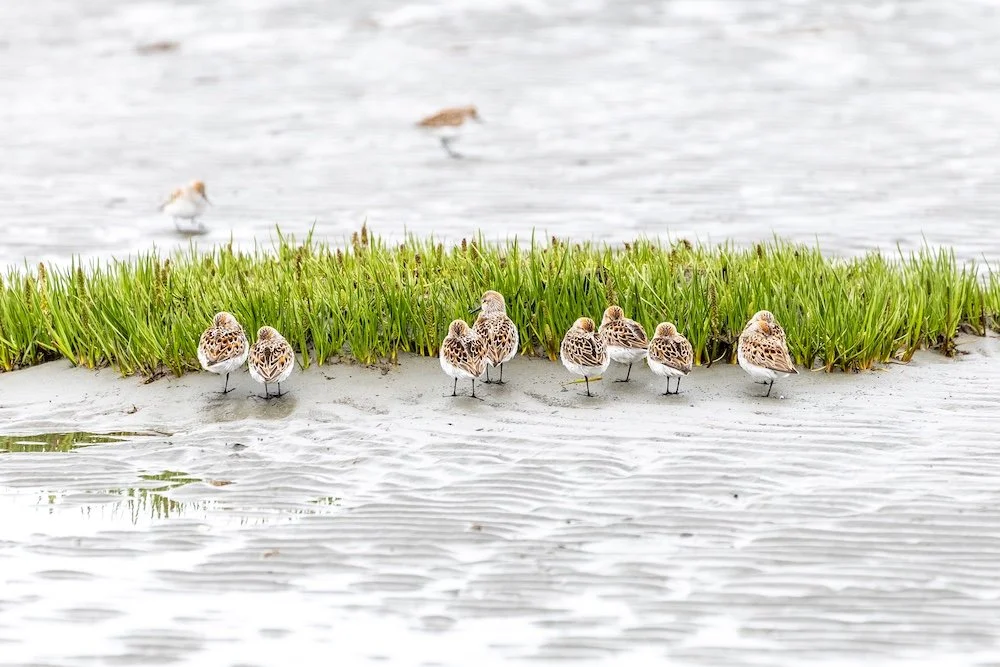
Western Sandpipers
There is still plenty of time to spot migrating seabirds, songbirds, and waterfowl. Some species, like sparrows, pelicans, and rufous hummingbirds, will stick around for the summer, while others continue to travel along a coastal corridor that stretches from the Arctic to South America.
Our area is vital to these migrating birds. Birds moving between Alaska, Canada, and wintering grounds farther south follow the Washington coast, and Grays Harbor gives them one of the most productive places to stop between the Columbia River and the Strait of Juan de Fuca. Intact estuaries of this scale are rare on the Pacific coast, which is part of why Grays Harbor plays an important role on the flyway.
Dunlin, dowitchers, plovers, warblers, sparrows, ducks, and geese gather near beaches, tide edges, mudflats, sloughs, ponds, and wetlands to rest and feed before continuing on their journey.
Mudflats provide worms, tiny clams, and other invertebrates. According to the U.S. Fish and Wildlife Service, birds that feed in the Harbor can gain up to 30 percent of their body weight in fat before resuming travel.
Waterfowl use seeds, shoots, and the shallow water of ponds and sloughs. Songbirds hunt insects in brush or feed on berries. Different birds use different parts of the same shoreline, which is why habitat variety matters. A marsh, a mudflat, a brushy edge, and a sheltered bay each serve a different set of travelers.
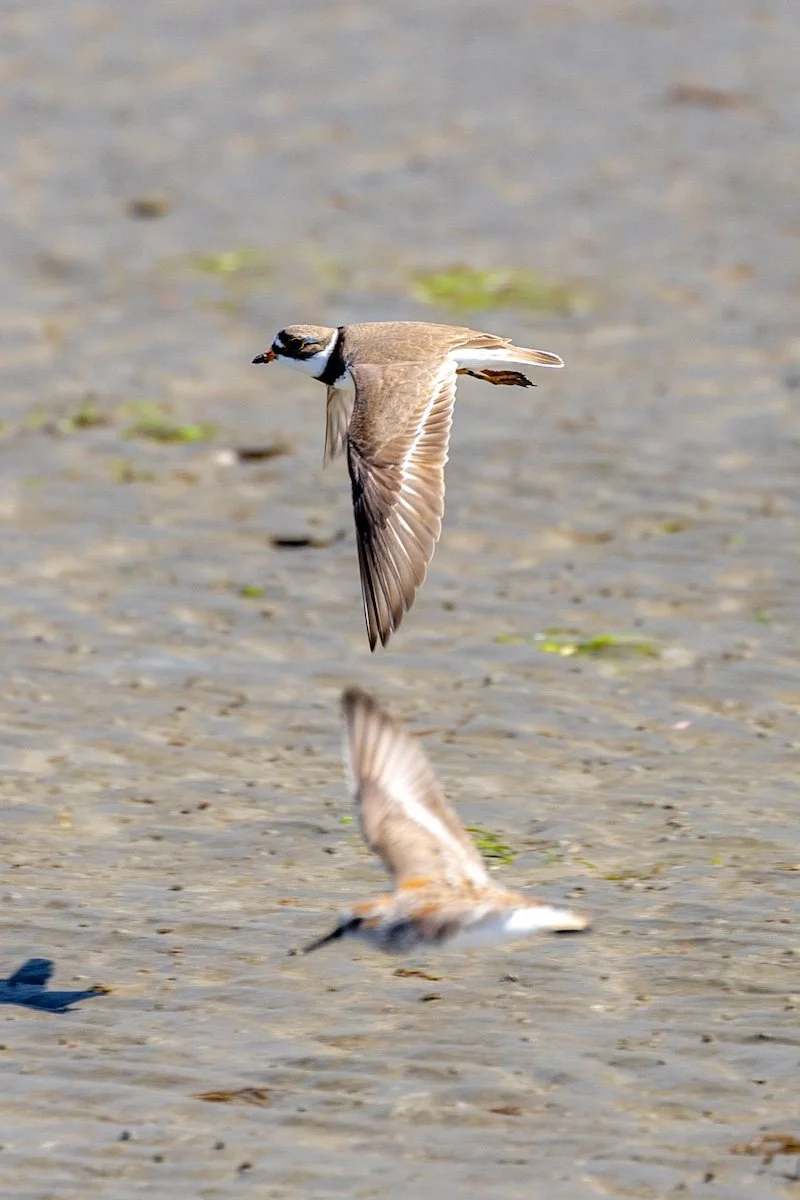
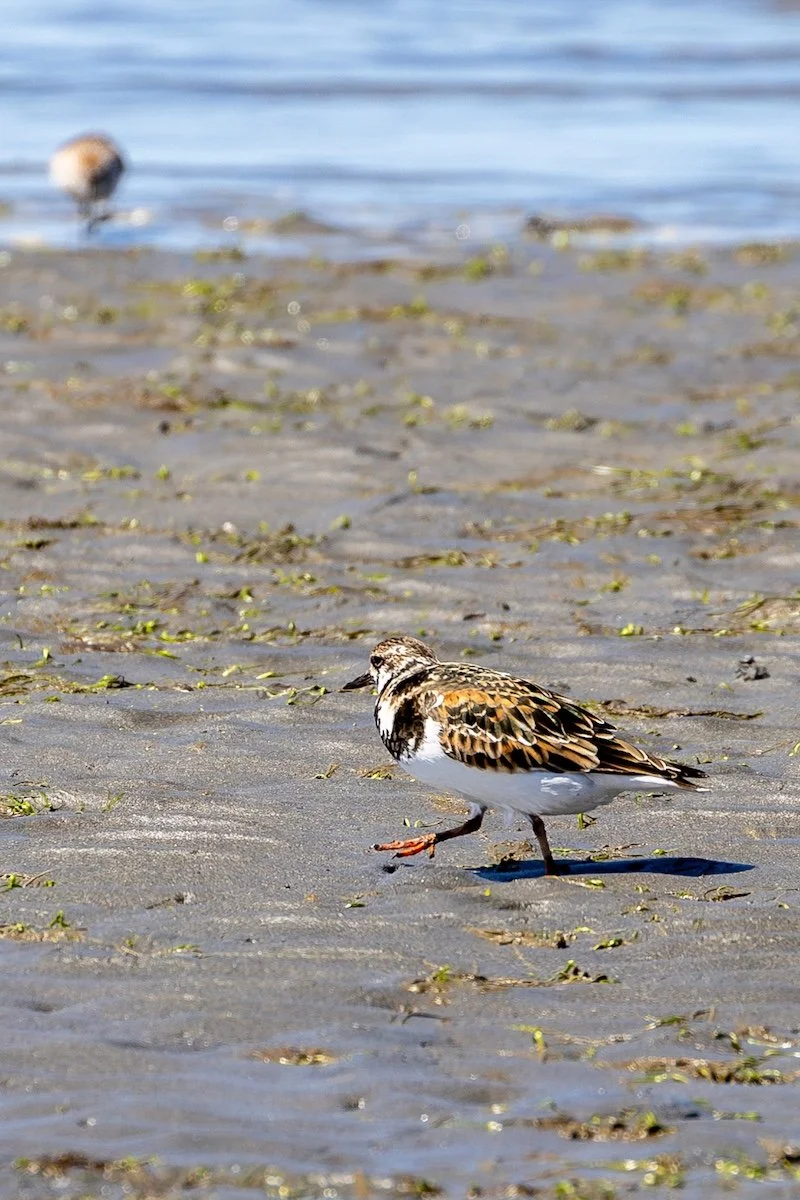
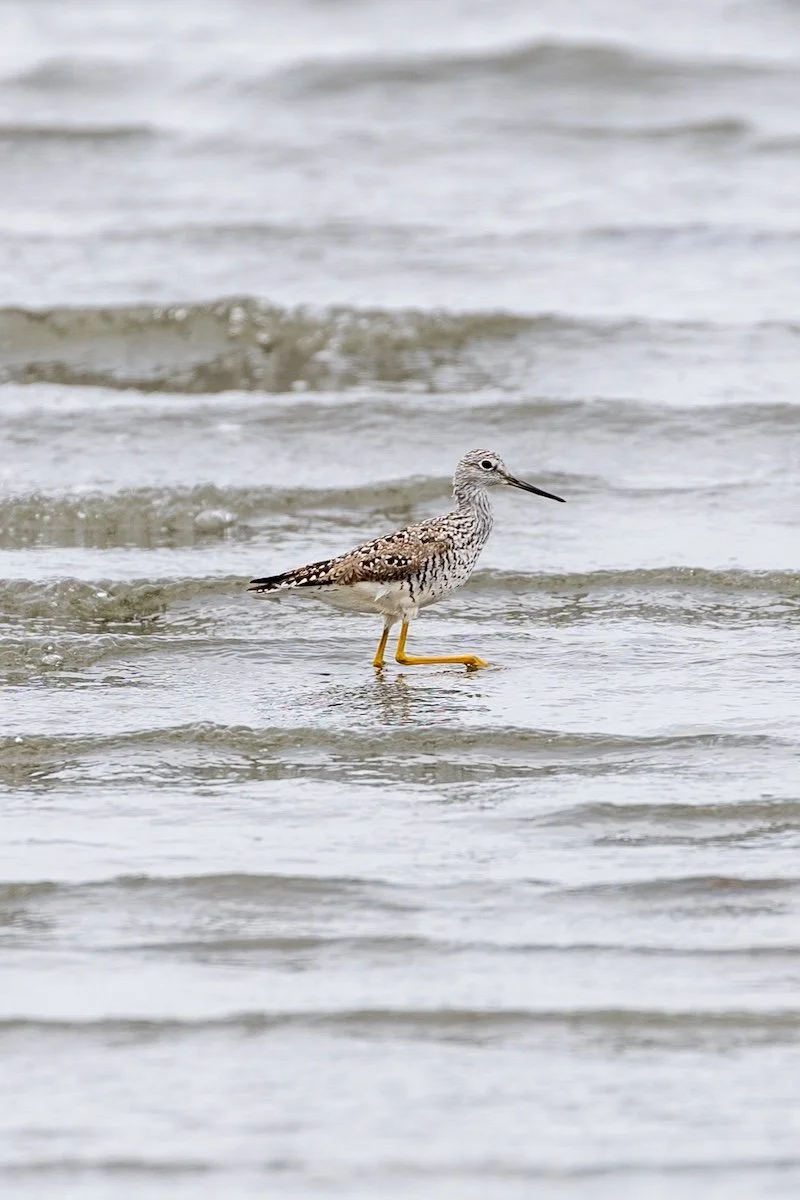
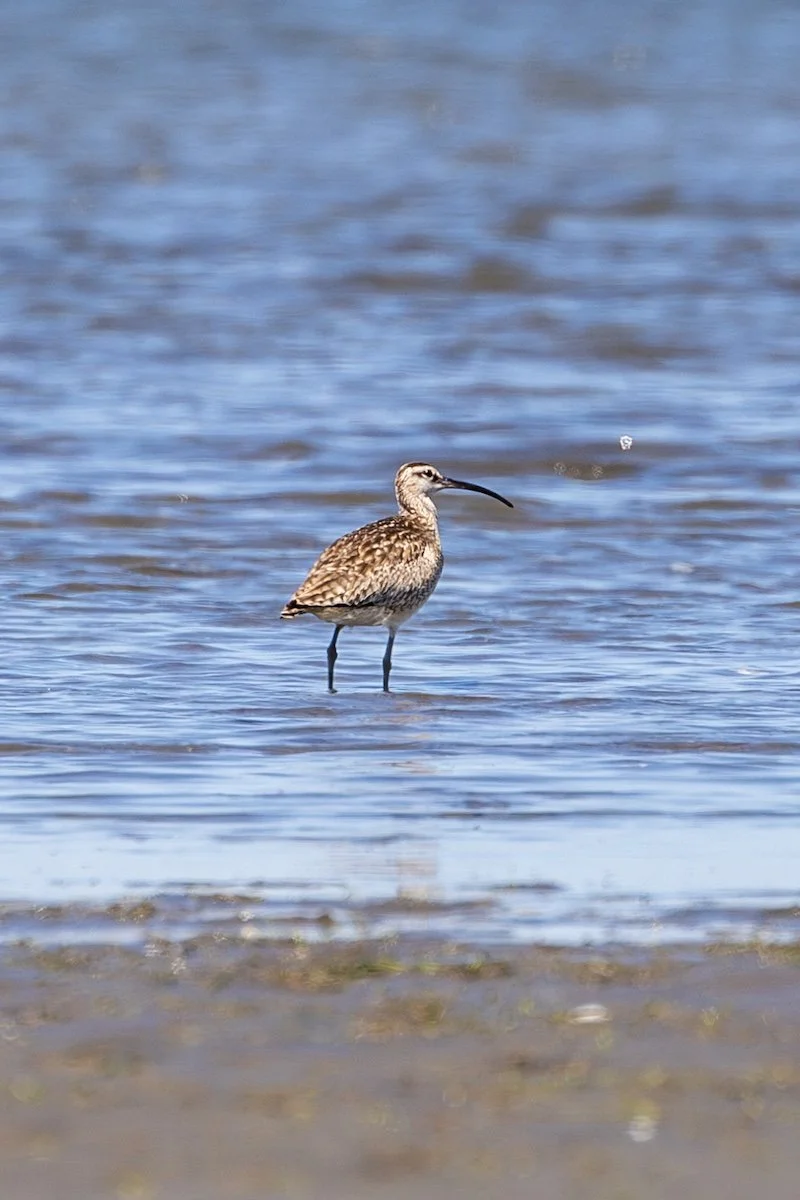
Our area is on what's called the Pacific Flyway, a chain of stopovers where birds can feed, rest, preen, and recover undisturbed. If any stopover weakens, the next leg gets harder. When habitat shrinks, birds feel it quickly. Drained wetlands, shoreline development, polluted runoff, and heavy human disturbance reduce feeding time and cut into safe roost space.
Grays Harbor National Wildlife Refuge is "one of six major estuary systems on the Pacific Coast and one of the largest concentrations of shorebirds on the west coast, south of Alaska." Bowerman Basin in Hoquiam “hosts up to 50 percent of the migrating shorebirds on the Pacific Flyway each spring.” To see the most birds, visit during and around the high tide.
Other great spots for birdwatching include Bottle Beach State Park, Westport Light State Park, Westport Marina, Grayland Beach State Park, and Tokeland Marina. If you want a guide or a community of local birders, the Grays Harbor Audubon Society is a great resource and welcomes birders of all experience levels.
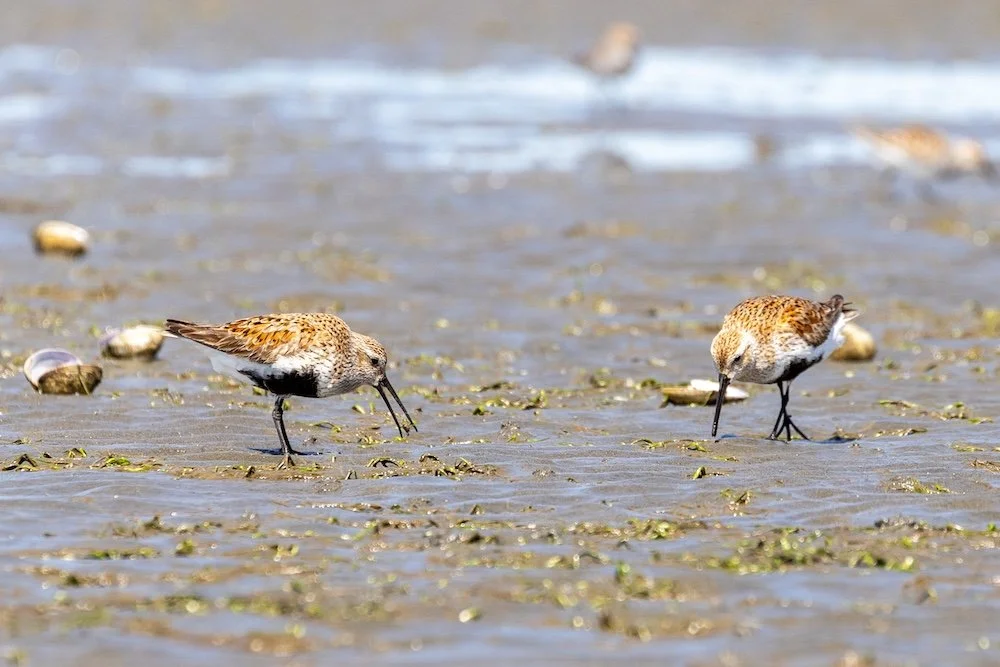
Dunlins
That chain of stopovers is only as strong as its weakest link, and some of those links in Grays Harbor are now under threat. A proposed 18-hole Scottish links-style golf course put forward by Westport Golf Links, Inc., in partnership with the City of Westport, would fill up to 43 acres of wetlands, install lighting, use heavy machinery, and apply pesticides and fertilizers in Westport Light State Park. That could damage critical bird habitat, weakening the very stopovers that make this location so important to the flyway. Read more about the environmental concerns here.
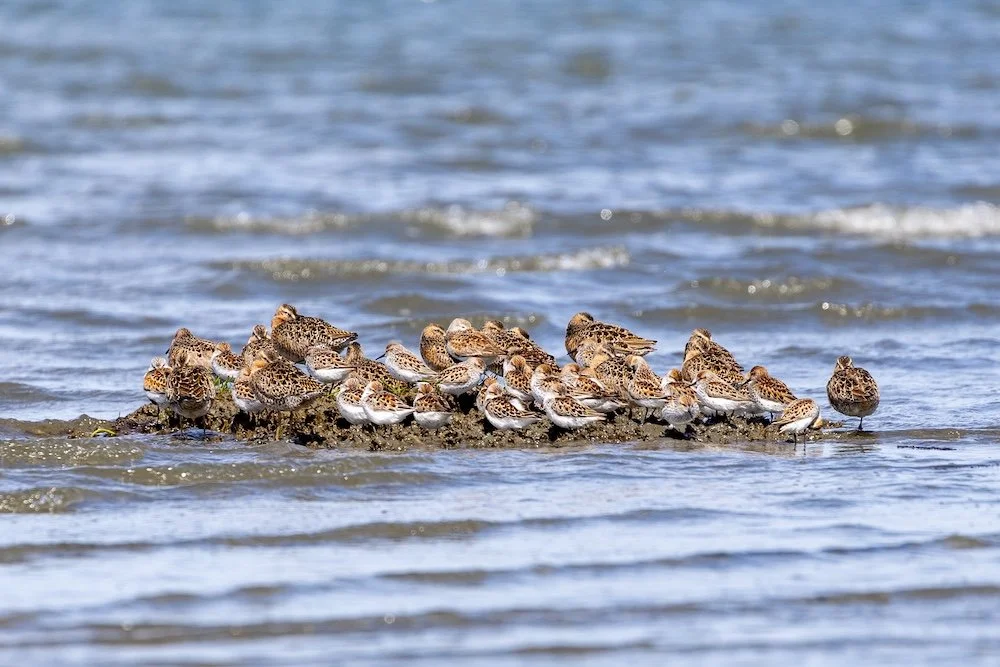
Short Billed Dowitchers and Western Sandpipers
None of that has happened yet. The wetlands are still here, and so are the birds.
Which means right now is a good time to get outside and go see the birds. If you want a head start on what's been spotted where, check out eBird at ebird.org. It's a free tool where local birders log sightings in real time, and Grays Harbor shows up regularly with impressive lists.
World Migratory Bird Day is a good reminder that this place matters far beyond our county lines. Take a look around this week and post on The Drift’s Facebook page about what you see!