
Geocaching -A Family Adventure
I first learned about geocaching ten years ago when I was leading my daughters' Girl Scout troop. Geocaching is a real-world treasure hunt you play with a phone app or GPS device. Someone hides a container, posts the coordinates online, and other people go find it. It was a badge option for Junior Girl Scouts, and our troop of 4th- and 5th-graders wanted to give it a try. The requirements were learning to use a GPS, making a trade item, and going on an adventure. We even got to tour Geocaching Headquarters in Seattle's Fremont neighborhood, which is still there, and you can still take a tour!
A few weeks ago, my daughter Ruby, now 21, and I were walking the dune trail in Twin Harbors State Park. We switched over to the woods trail, and Ruby pulled out her phone. "Let's go find a cache," she said, and opened the Geocaching app. All these years later, she'd kept it up some, most recently geocaching around Vancouver, B.C., with her college roommate. I said sure, and we were off looking for a micro cache in the park, which she ultimately found.
What's a Cache?
A cache is the hidden container. It might be as small as a magnetic tube or as large as a waterproof box. Most are hidden in safe public places. (There are two on the paved trail from the Coast Guard tower to the viewing tower.)
Inside, you'll usually find a logbook or paper strip for signatures. Larger caches may also hold small trade items, like stickers, toy cars, or keychains. Some hides are plain containers; others are creative, themed, or puzzle-based. Signing the log is how you prove you found it.
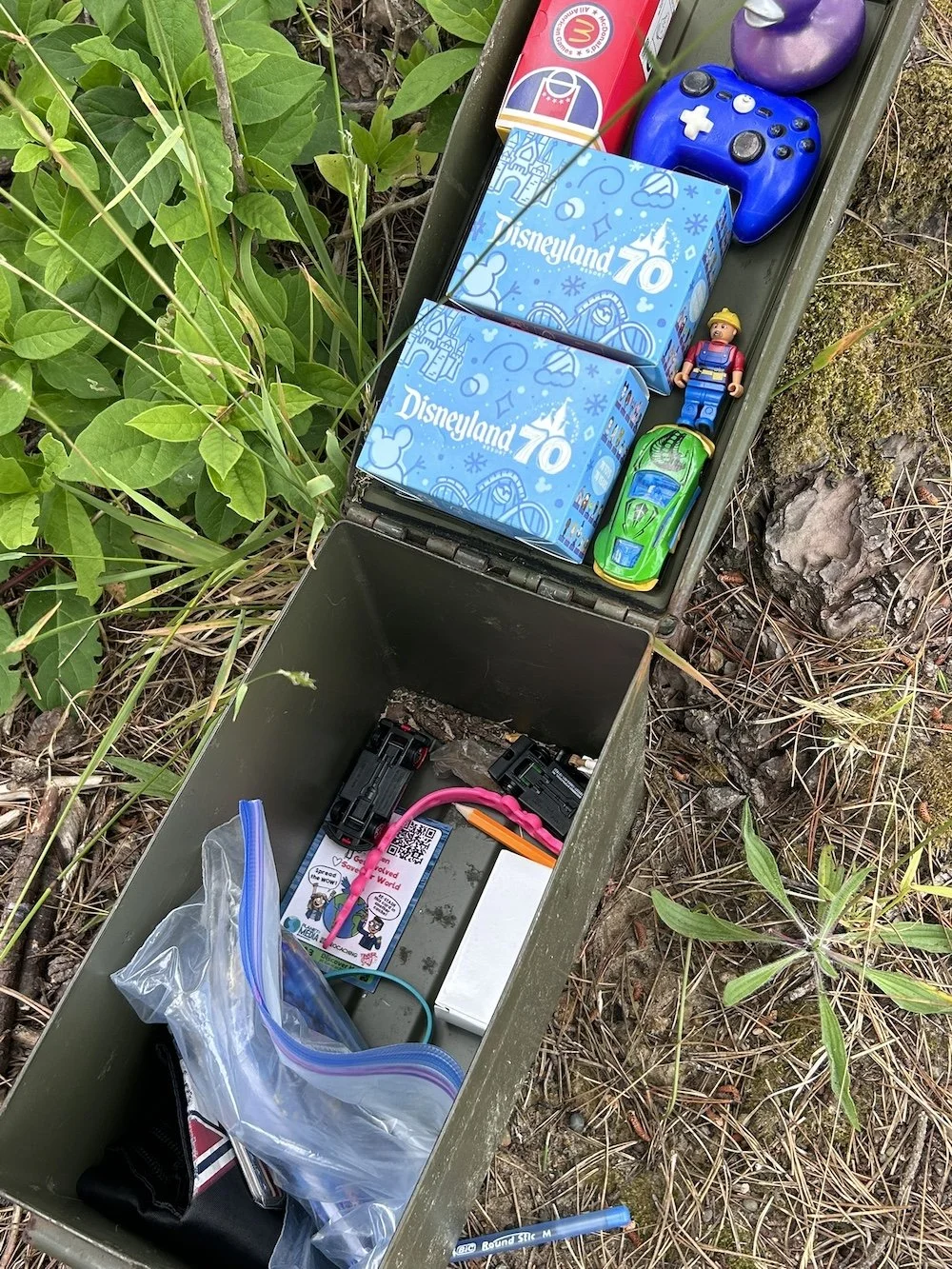
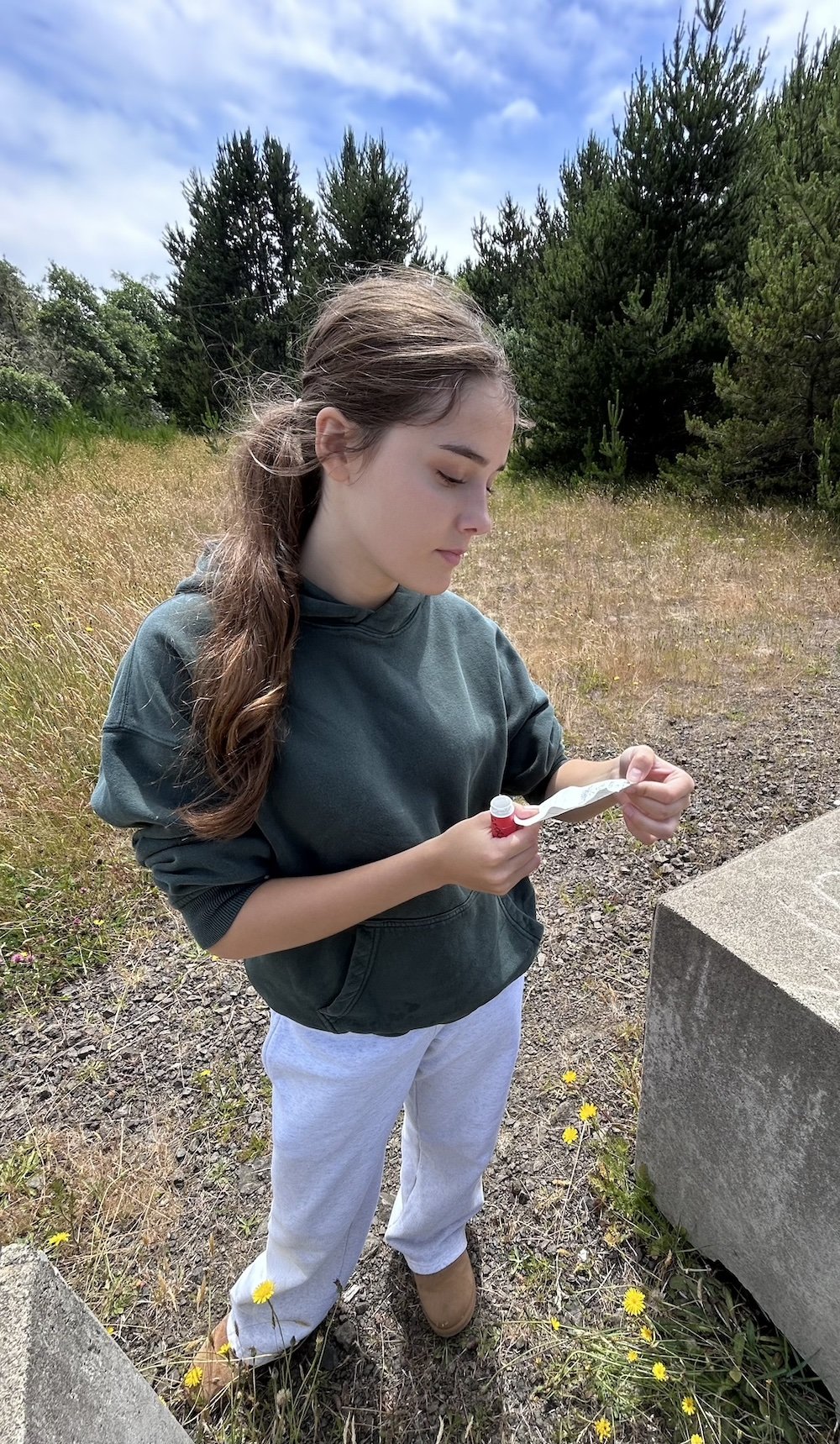
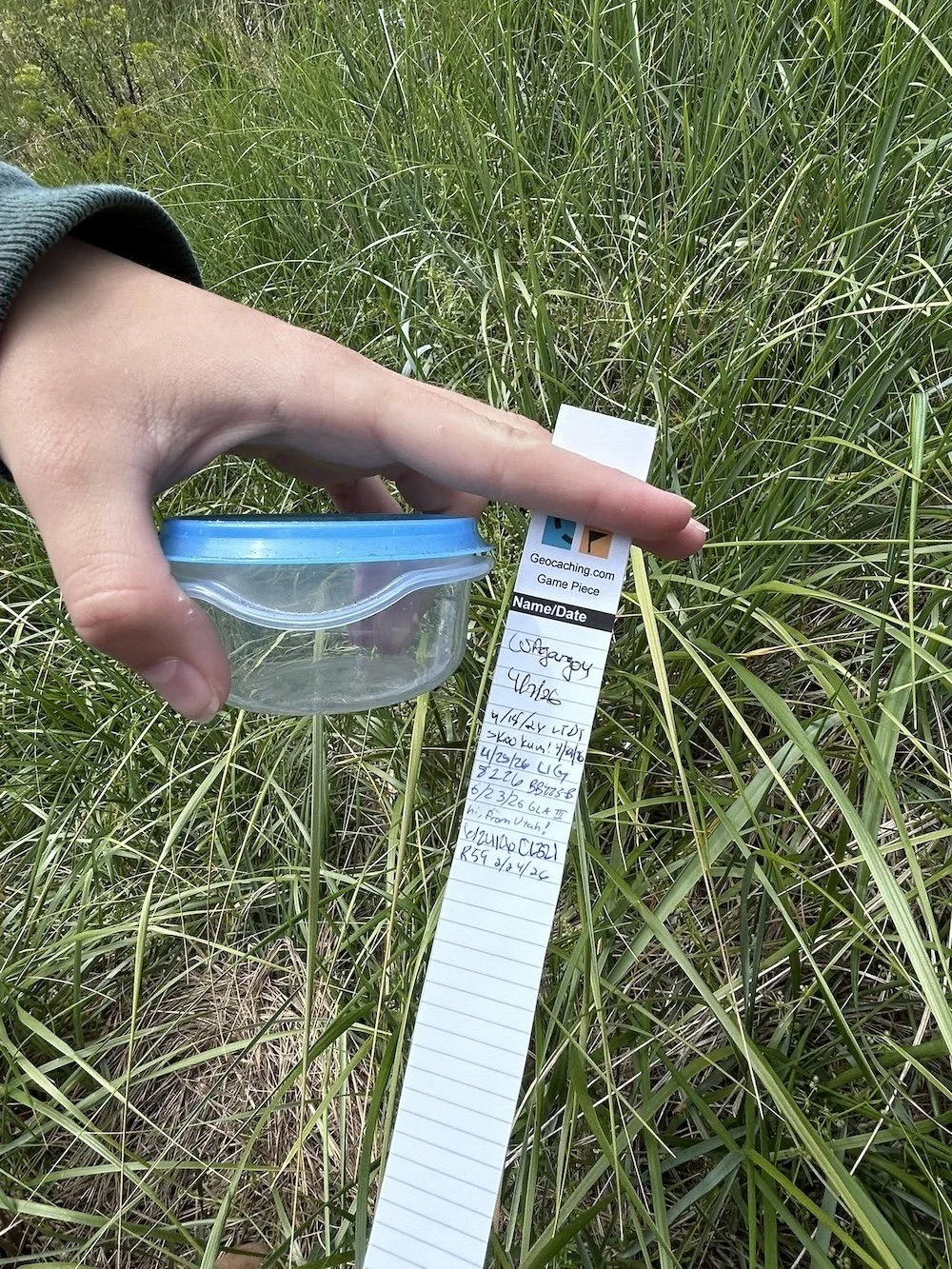
If you use the Geocaching app, it gives you coordinates and guides you to the location. Caches are rated by difficulty and terrain, and there's usually a hint, though that doesn't always help. My younger daughter, Naomi, and I struck out looking for a small cache near the Street of Flags/Veterans Memorial Park. Maybe we gave up too easily, but it leaves us a reason to go back.
Tips for Getting Started
First, download the Geocaching app. There's no shortage of caches in this area! The app is free but also offers an upgrade. I opted in for the $5 upgrade so we could search for more premium caches. It's a monthly fee, so be sure to cancel it if you're only using it temporarily.
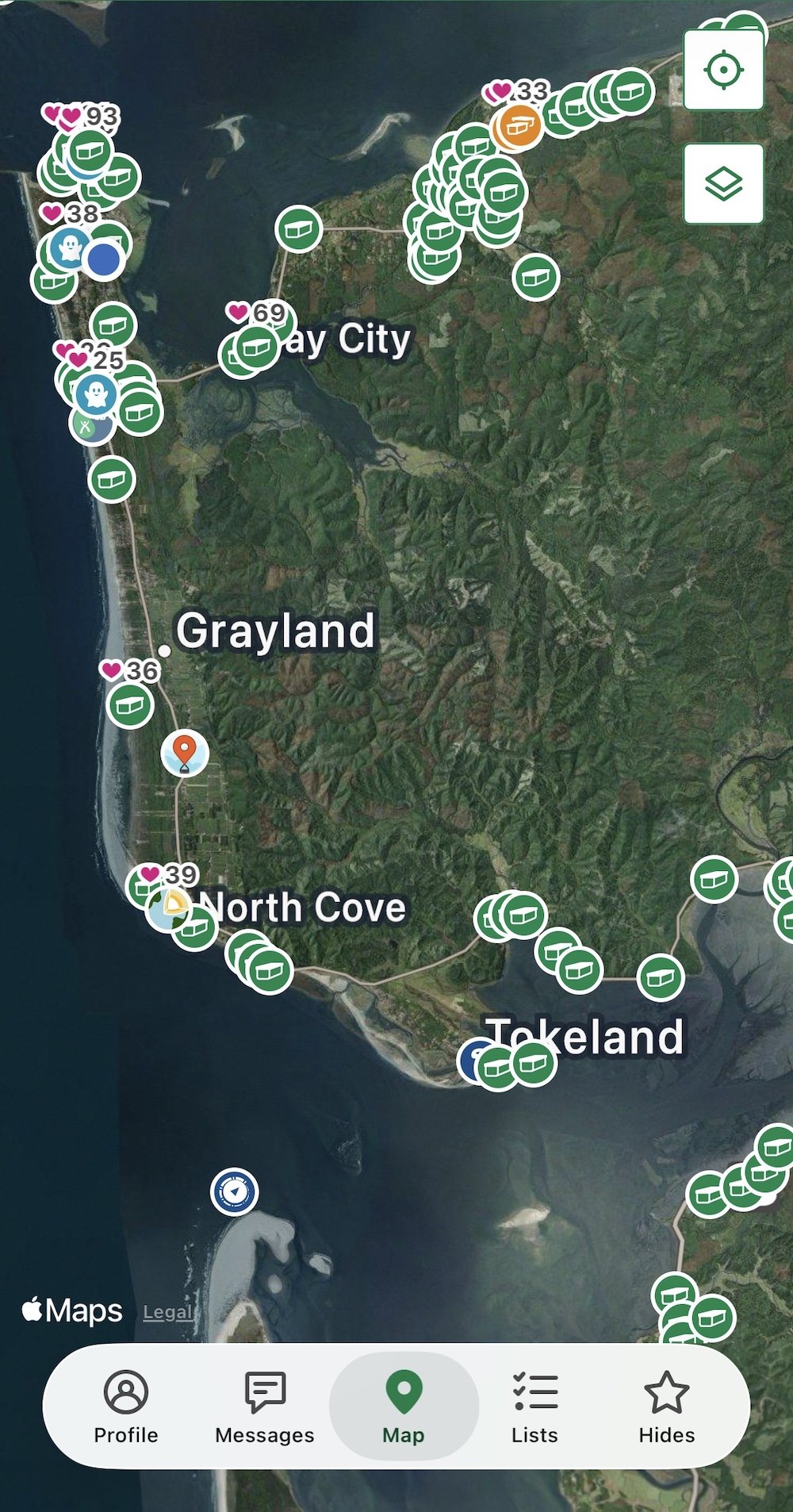
An image of geocaches in the area from the geocaching app.
If you're just starting out, pick a cache with a low difficulty and terrain rating. To be honest, Naomi and I had trouble finding a cache rated 2 out of 5!
A few things that help:
Search for a cache that's been found recently. If several people have found it in the past couple of weeks, it's probably still there.
Read all the cache details and check the hint. Early success builds confidence, and one solid beginner find beats three frustrating misses.
Cache Etiquette
Good etiquette matters. Stay off private property unless the listing makes access clear, and don't take risks for a container. Practice stealth and don't let the "muggles" see what you're doing. Muggles is a term geocachers use (borrowed from the Harry Potter series) that means everyday people.
There's actually a cache near a business at the marina that Ruby and I gave up on finding because we felt awkward searching all around the property. Even though the cache is there with the business owner's permission, there were too many “muggles” around for us to feel comfortable.
Leave the area the way you found it. When you spot the container, open it carefully and sign the logbook (some folks skip the paper log and just tap "Found It" in the app). If there are trade items inside, only swap when it makes sense, and leave something of equal or greater value. Put the cache back exactly where it was, and don't reveal the hiding spot to people nearby. When geocachers follow the spirit of the game, caches last longer and the hunt stays fun for everyone.
You don't need much to go geocaching: your phone, comfortable shoes, a pen if you want to sign the log, and maybe a few stickers or small trinkets to trade.
Create Your Own Cache
If you fall in love with the hunt, hiding your own cache is the next step. Geocaching HQ recommends finding at least 20 caches first to get a feel for what makes a good hide and choosing a sturdy, waterproof container. Geocaching.com has the full official guidelines on placement, permissions, and getting your cache reviewed and published, so head there when you're ready to try it.
Geocaching is a great way to get outside and explore. I know as a parent it's frustrating to see kids spending so much time on screens. As a parent of older kids now, I'm just looking for opportunities where they're willing to spend time with me. Geocaching is a neat blend of tech, teamwork, getting outdoors, and going on an adventure. My daughters and I are having fun with it, and we will be back hunting for new caches and, of course, the ones we couldn’t find.
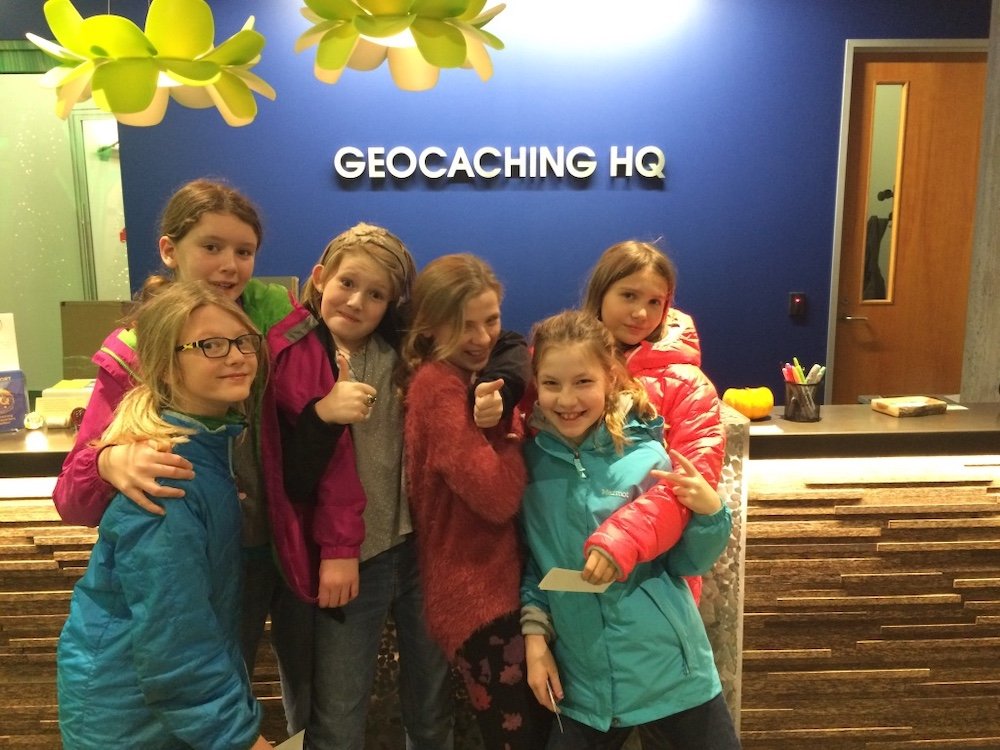
Girl Scouts touring Geocahcing HQ in 2016. My daughter Ruby is the tall one on the left with the pink rain jacket.