
South Beach Fire's $10 Million Bond: A Q&A With the Chief
On August 4th, voters in the South Beach Regional Fire Authority (SBRFA) district will decide on a $10 million, 25-year bond to fund a new, centrally located fire station.
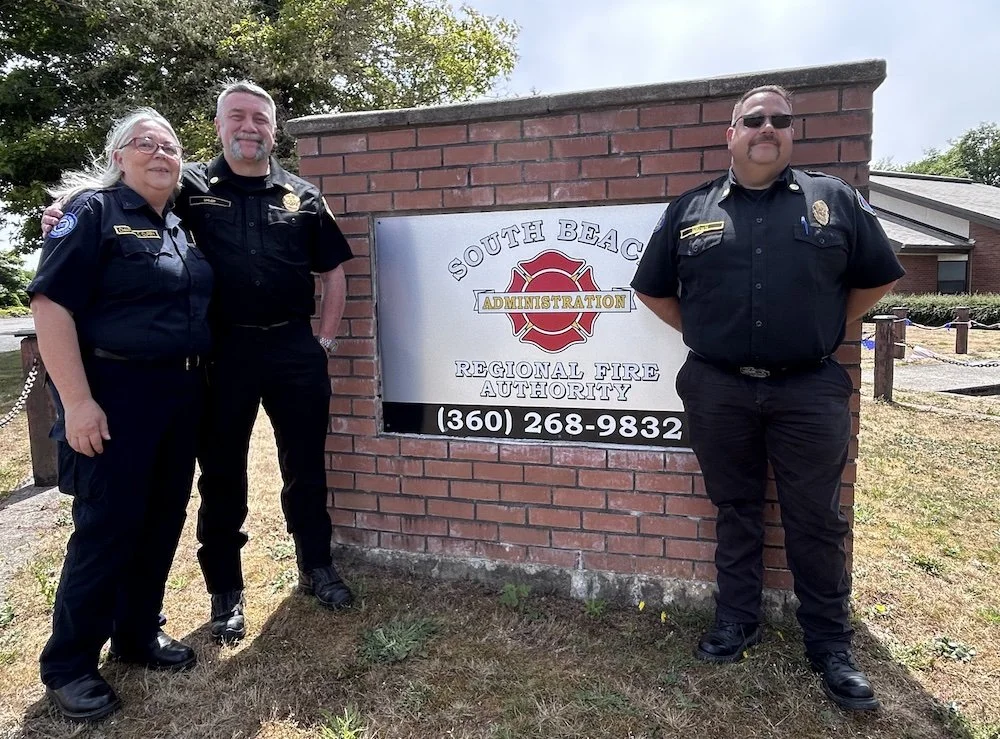
Pictured Left to Right- Chaplain Coleena Curry, Assistant Chief Dave Uhler, and Fire Chief Daryl Brown
The current Westport Fire Station was built in 1972 and doesn't meet modern standards. It lacks space, important firefighter health and safety features, and an efficient layout to support emergency response. It also sits in a tsunami zone and wasn't built to modern earthquake standards.
The proposed new site solves several of those problems at once. It's outside flood and tsunami zones, offers access to highway-speed roads in multiple directions, and sits closer to the geographic center of the district's response area. It's also located across the road from SBRFA's training facility, so the two sites could function together to support both training and emergency response.
If approved, the bond would cost property owners 37 cents per $1,000 of assessed value over 25 years, about $10.79 a month, or $129.50 a year, for the owner of a $350,000 home. Property tax relief may be available for qualifying seniors and people with disabilities; residents can check eligibility through the Grays Harbor County Assessor's property tax exemption page.
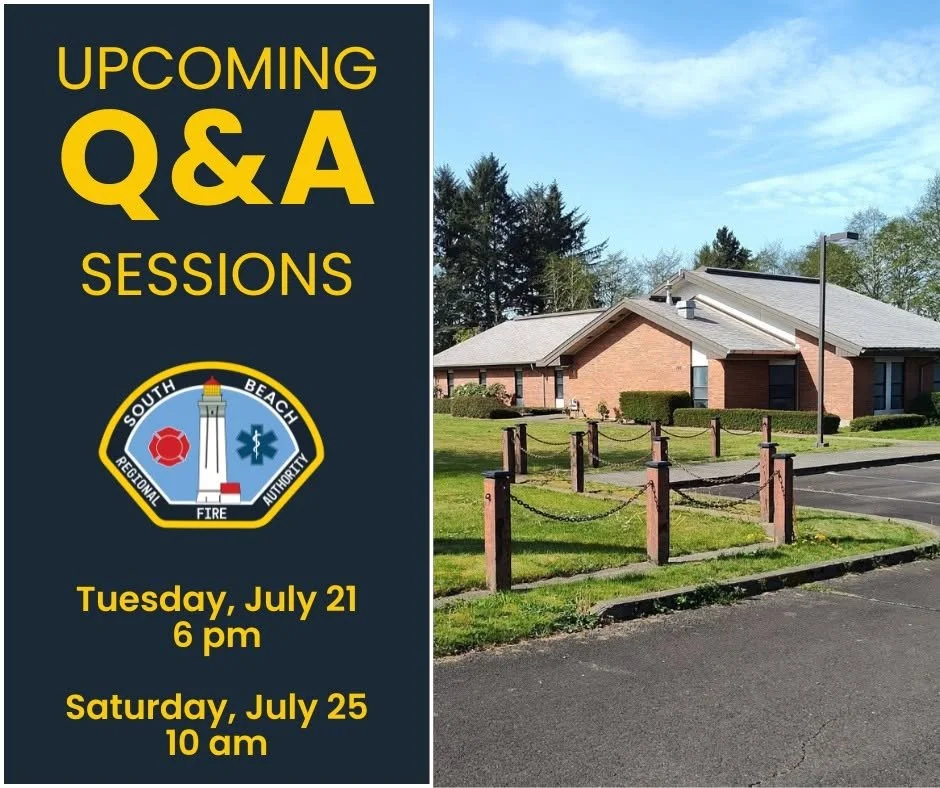
SBRFA is hosting two community meetings for residents. A short presentation will be followed by Q&A. Both will be held at the SBRFA Administrative Building, 708 Englewood Lane S:
Tuesday, July 21 at 6:00 PM
Saturday, July 25 at 10:00 AM
I recently sat down with Fire Chief Daryl Brown and Assistant Chief David Uhler to talk through the details.
Q: Just to make sure I understand this correctly, a 25-year bond means the property tax increase lasts for 25 years?
Chief Brown: Right, the 37-cent-per-$1,000 rate would apply for that 25-year cycle. But the district assesses what's actually required each year to meet the bond payment, so the rate could actually go down as more homes are built and purchased and more people share the tax responsibility. But it will also never go above 37 cents.
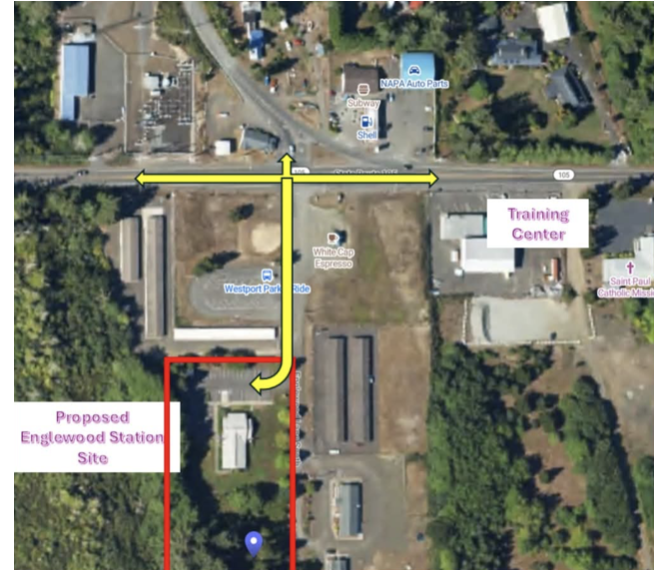
An aerial map image of the proposed new Englewood Station Site
Q: Is the $10 million only for the construction of the building? Is there a breakdown of what it covers?
Assistant Chief Uhler: The language is really around outfitting the building. These stations need things like HVAC systems for ventilation, and a system called Plymovent that removes diesel exhaust when apparatus back into the bay. It's not just the building itself; it's all the systems and tech that go with it. Current construction costs run about $400 a square foot, which is a pretty average number nationally. That's for NFPA compliance and building standards. The greatest hope is that we'll manage the budget as tightly as possible, and if there is money left over, it could go toward an ambulance or engine replacement. (Note- SBRFA’s current truck is 20 years old.)
Q: For people asking, "Why do we need a new fire station? What's wrong with the current one?" What would you say?
Chief Brown: The need for a new station has been here for 10 years, and it’s not going away. Our current station was built in 1972, and it has been a blessing. It has served this community for 54 years. But it was built as a garage for a volunteer response model in which crews would drive from home to the station to pick up the truck. That model has changed. Now crews congregate as a team and live at the station for shifts. They eat together, exercise together, train together, and respond together. The current building was designed as a gathering hall, not living quarters, so over the years, staff have tried to adapt it, and honestly, there are no options left to make the space bigger.
Q: What will happen to the current building once you move out?
Assistant Chief Uhler: The district doesn't own that building; the city of Westport does. It's been a lease. The 2024 report on that building recommended against further investment. What happens to it next is really up to the city. It will probably never be a fire station again, maybe a maintenance garage or a place to store vehicles.
Q: If the bond passes, what's the timeframe for building out the new fire station?
Chief Brown: Once approved, we're looking at roughly 18 to 24 months for construction.
Q: What about the current EMS and fire levies? I know one expired. Will SBRFA seek new levies if this bond passes?
Chief Brown: We have two standing levies set by state law: a fire operations levy, capped at $1.50 per $1,000, and an EMS levy, capped at $0.50 per $1,000. Those don't require a vote; they're already authorized. A separate maintenance and operations levy was allowed to expire a couple of years ago, in part because the district knew this bond was coming. At peak, the combined rate was $2.77 per $1,000. Today it's around $2. The bond brings that to $2.37. Going forward, the plan is to use periodic lid lifts, typically every three to seven years, to gradually reset rates to the legal maximum.
Q: Are there other ways fire authorities can get funding? Grants, outside funding?
Assistant Chief Uhler: Yes, constantly. This year, we received a $75,000 communications equipment grant from AgWest Financial. We secured state funding for a $140,000 emergency backup generator for this building. We've also applied for federal assistance through firefighter grants- about $50,000 for hoses and nozzles and $740,000 for a fast-attack mini pumper built for our narrow roads and beach terrain. But there's no single grant that funds an entire fire station.
Q: How would this location change response times?
Assistant Chief Uhler: Response time for us covers everything from the 911 call to getting apparatus out the door and to the scene. Current station design has crews responding from a different floor than the apparatus, which fire design generally advises against. The new station addresses that. On location: insurance rating agencies consider you well covered within five miles of a station. Mapping about 10,000 calls since December 2020 shows the current Westport station covers about 69% of call volume within five miles. This new location would put roughly 75% of calls within that radius. Combined with our satellite stations in North Cove and Ocosta, it better matches where people actually live.
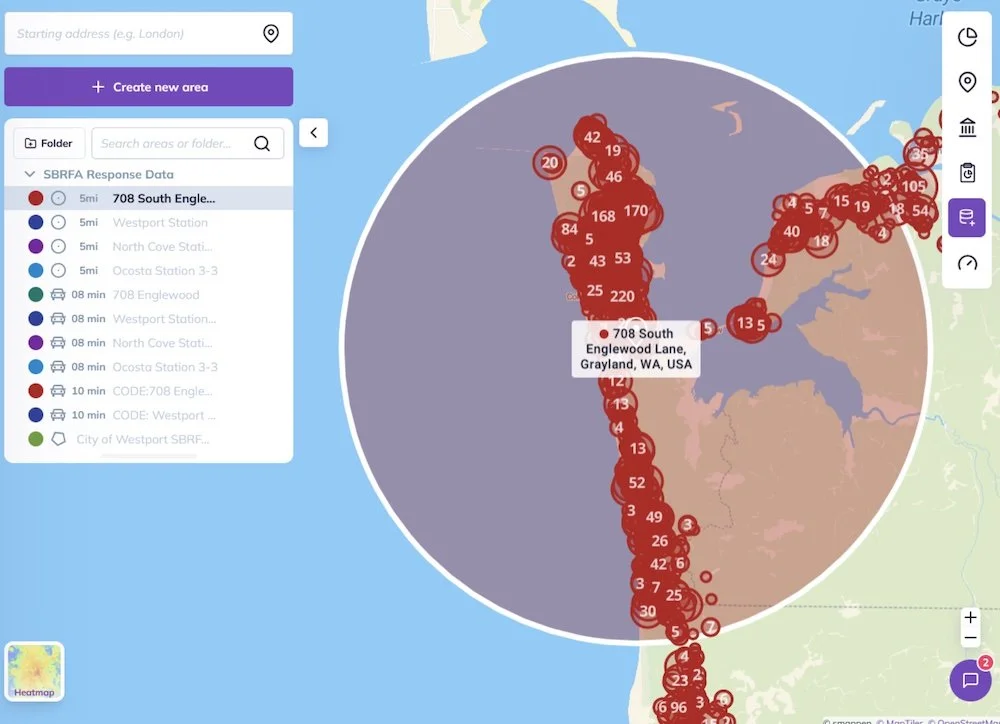
The bubble in the image represents service radius from Englewood Stations
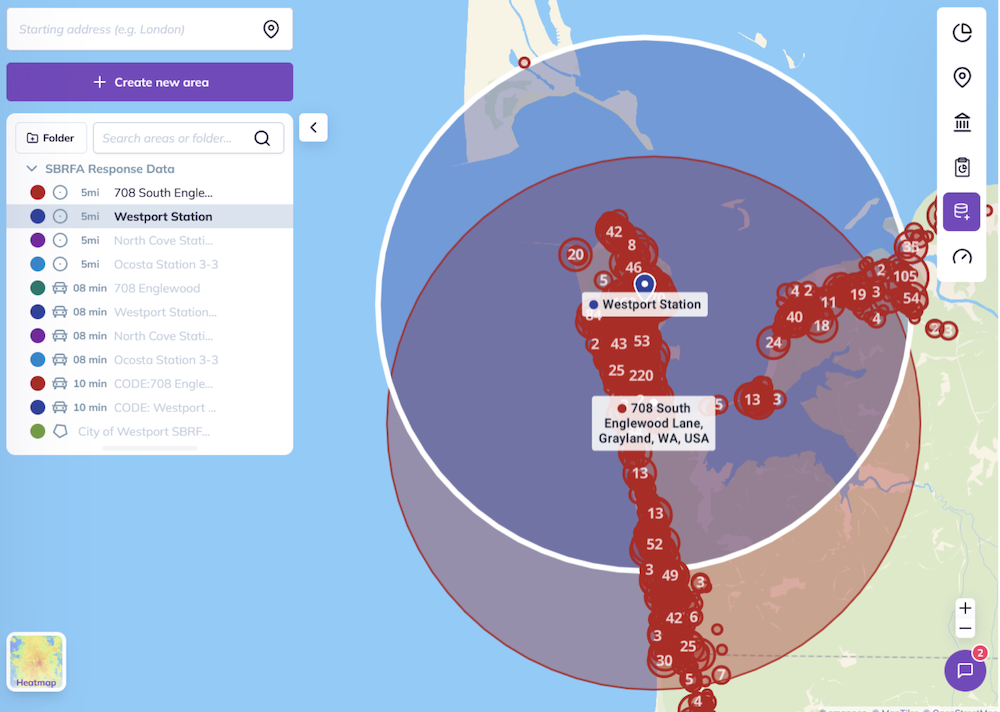
The bubbles represent service radius Westport Station vs Englewood Station
Q: Do you know how many property owners this will affect? And what do you say to people who are struggling financially right now?
Assistant Chief Uhler: Working with the state Office of Financial Management, we found the district serves about 2,500 people within the city of Westport and about 2,500 more across the rest of the district, roughly an even split. That breaks out to about 1,400 households in the city and about 1,400 across the rest of the district.
Chief Brown: On affordability, I understand this is a difficult time, and this number was impactful for me too. But inflation is running around 6% a year, so waiting means paying more later or getting less building for the same money. We're paying for a station that should last 40 to 50 years in today's dollars. As the community grows, that cost gets shared across more property owners. There's also a property tax exemption available for qualifying senior citizens and people with disabilities that can reduce or forgive part of the tax owed.
Q: Are there other areas or state fire districts that have had a bond like this?
Assistant Chief Uhler: Yes, we looked at several. North Mason Fire passed a similar $10 million bond in 2019. Lake Wenatchee Fire and Rescue passed a 20-year, $15 million bond, and Oak Harbor passed a 21-year, $9.2 million bond.
Q: What's the biggest worry people have about this, and how are you addressing it? What happens if it doesn't pass?
Chief Brown: Some residents in the city of Westport may worry about feeling farther from coverage, since the city has had a fire station within its limits since the 1960s. I want to be clear that we're not abandoning them. About 41% of the people we serve live within city limits, and with this design and access, we can still reach about 90% of the city's residential area within five to six minutes. Statistically, we actually respond to more calls outside city limits than inside them across our full 32-square-mile district.
If the bond doesn't pass, the need doesn't go away. It's been building for about ten years. We'd likely go back to voters again later, at a higher cost due to inflation.
Q: Voter turnout isn't always that high. Would that affect this vote?
Chief Brown: It does. Beyond needing 60% approval, state law requires that at least 40% of the number of people who voted in the last general election also cast a ballot in this election, or the result doesn't validate. So we're asking everyone to vote either way, please just vote.
Voter pamphlets should be in residents’ mailboxes around July 17th. For further questions to learn more about the proposed station, please attend one of the community meetings on July 21st or 25th.