
Is the Port of Grays Harbor Pushing Out Westport Fishing Families?
A growing divide is building between the city of Westport and the Port of Grays Harbor, with local fishing families caught in the middle. What began as disagreements over dumpsters and funding has evolved into fundamental questions about who the Port serves and whether Westport's working waterfront is in jeopardy.
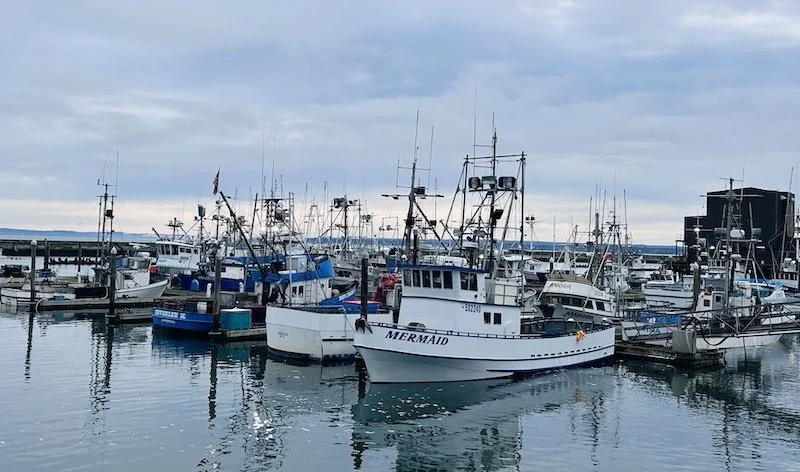
The Westport marina is the number one seafood landing in Washington state
The Flashpoint: A Heated LTAC Meeting
The tension came to a head at this week's Lodging Tax Advisory Committee (LTAC) meeting, where Westport Mayor Ed Welter submitted a letter asking the committee to take a closer look at the Port of Grays Harbor projects seeking city funding. At the center of the debate: whether the Port's proposals truly support local Westport industry and business, or whether they benefit the Port at the expense of working fishing families.
The city's frustration with the Port has been building. After the Port refused to supply dumpsters already allocated in their 2025 budget and declined to support Westport's push for House Bill 1806—legislation that would give the city a share of landing tax revenue to maintain infrastructure stressed by the fishing industry—the city is questioning whether the Port has Westport's best interests at heart.
Three Core Issues
Next Big Fish: Who Benefits?
The Port's newest proposal, "Next Big Fish," is a $40,000 marketing campaign focused on charter fishing and tourism. The idea is to attract younger anglers, increase charter bookings, and bring the next generation of fishing to Westport. When presented to the City Council on October 13th, 2025, the project was endorsed by the Westport Charterboat Association. Molly Bold, General Manager of Westport Marina, gave a presentation outlining the project and said, "We want to see new people coming here for charter fishing."
The Port wouldn't be contributing any actual funding to the project, only administrative hours. At the meeting, the City Council voiced support of the project and approved three budget proposals from the Port totaling $40,000 for Next Big Fish, $17,000 for the existing Fresh Catch program (which has successfully connected visitors with local seafood since 2020), and $7,500 for a buoy project.
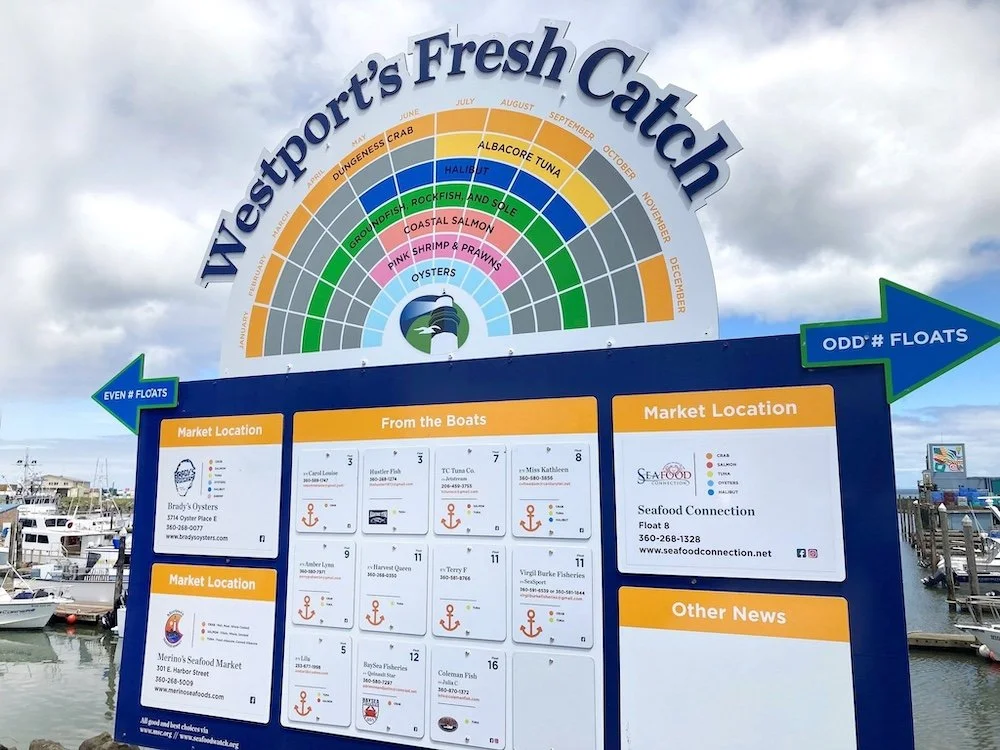
Westport Fresh Catch Signage at the Marina
But here's where things get contentious.
Recently, the Port sent out a notice to annual moorage holders regarding the Next Big Fish campaign, but what struck some local fishermen off guard was that the notice said the program was “an exclusive benefit to Annual Moorage customers.” The problem? Several working local boats in the Westport Marina haven't been granted year-round moorage and have instead been classified as "transient" status—meaning they pay much higher moorage fees despite being local, tax-paying businesses.
Westport local Adrienne Jones, who owns two fishing vessels, has one boat that hasn't been granted annual moorage. She has written letters of concern to the Port and has also asked the city of Westport for help. "I sell local seafood, operate locally, employ locally, and contribute to the working waterfront that these programs are designed to showcase," Jones wrote in her letter. "Excluding my business from LTAC-funded initiatives because of a moorage designation that the Port itself has imposed undermines the stated purpose of these programs and raises serious fairness concerns."
The fundamental question: If a program is funded by Westport's lodging tax dollars, should it exclude local businesses based on a classification system controlled by the Port?
The Regional Marina Contradiction
Mayor Welter raised another concern in his letter to LTAC: "POGH is on the record stating that they are a regional facility. If this is the case, then why is the City of Westport the sole contributor to these programs, and additional matches aren't being sought by the port?"
He continued: "It is very important that these public funds benefit the entirety of the Westport constituents and taxpayers. The POGH speaks frequently about being a working waterfront; however, we have had multiple public comments about how their policies do not support the commercial aspects of the marina. Do the Port's current policies truly align with supporting local industry and the businesses within the city?"
The Port brings in over $500,000 in leasehold revenue, yet questions remain about how much of that money flows back into the community. The port owns the esplanade and the observation tower, both of which are in dire need of repairs or updates.
An Issue of Trust
City Council member Troy Meyers didn't mince words during the LTAC discussion. "There is a significant growing trust issue between the city and port. The more the city looks into it, the more concerned we get. It doesn't seem like the port is acting with good faith or positive intent. And when we specifically asked them to work with us, they declined. If I can't trust them, I can't trust them to implement a program. If they don't want to work with us and resolve these issues, then something's going to have to give. And I'm not going to be happy about them trying to subsidize their failed business with the taxpayers of Westport and Grays Harbor County."
LTAC member John Shaw suggested putting the Port projects on hold until a broader discussion among the city, the fishermen, and the Port can take place. "We are going to see the end of the charter boat industry is my concern if we don't take a position," Shaw said in the meeting. "The port has marginalized what's going to happen. My position is to be supportive of the charter industry. I have people in my ear saying this project is just a smokescreen."
The Bigger Picture: Landing Tax and the Working Waterfront
The Port funding dispute is just one piece of a larger puzzle. Westport is also pushing for House Bill 1806, legislation that would fundamentally change how fishing landing tax revenue is distributed.
Currently, when fish are landed to shore, a "landing tax" is paid on the value of those fish. Right now, 99% of that revenue goes to the state of Washington. Neither the Port nor the city receives any of it. Westport, the largest food-fish landing site in Washington State, argues that all this fishing activity puts significant wear and tear on city infrastructure, from processing plants that use large amounts of water to long-haul trucks on the roads moving seafood in and out of the marina.
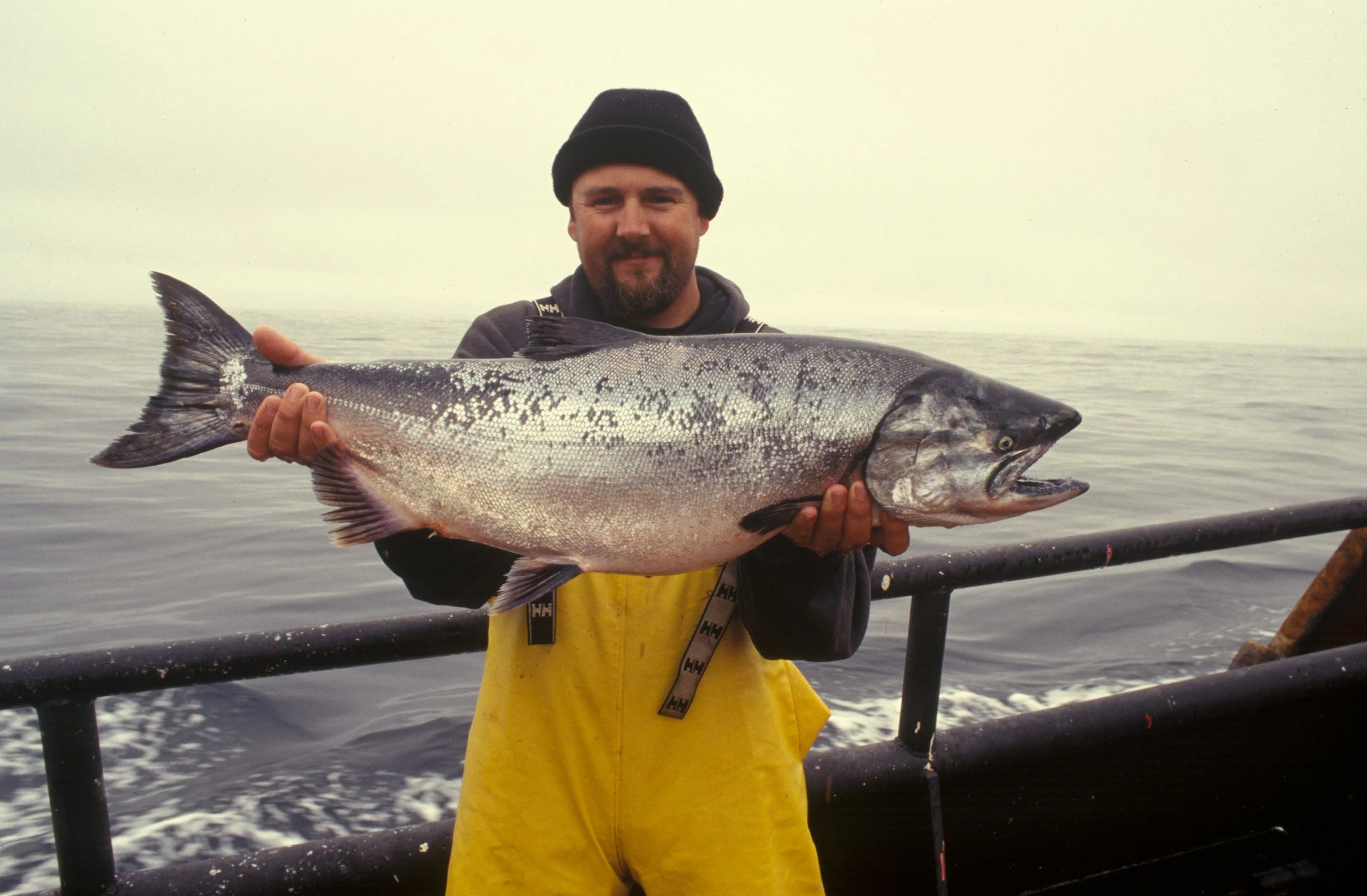
Fisherman holds a freshly caught salmon
House Bill 1806, proposed by Rep. Steve Tharinger (D-Sequim) would require 50% of the food fish tax collected to be distributed to the city where the fish landed. The bill isn’t just about Westport. It would support landing sites throughout the state, including areas like Raymond, Ilwaco, and communities along the Strait of Juan de Fuca. The bill didn't pass out of the House Financial Committee in 2025 and is unlikely to move forward in 2026 without support from the port. The port recently argued that they should receive the money from the fish landing tax, citing a need for $60 million to fix and modernize the Westport marina.
The Daily World wrote an in-depth article on the landing tax legislation, available here for more context. https://www.thedailyworld.com/news/westport-port-at-odds-over-fish-landing-tax-legislation/
To his credit, Mayor Welter has attempted to find common ground. He's mentioned that if the bill were signed into law, he would put a resolution before the Westport City Council committing funds to joint projects with the Port.
The Future of the Working Waterfront
Underlying all of these disputes is a deeper concern: Is Westport's identity as a working waterfront in jeopardy?
The fear is that the Port is trending toward policies that prioritize short-term revenue over long-term community sustainability. If local working boats are squeezed out in favor of recreational moorage (which can generate more revenue for the Port), what happens to Westport's character as a fishing community?
"If we don't have local people, we are no longer a working waterfront," said John Shaw. "We currently don't have a marina that is encouraging young fishermen, commercial, or charter. We need to get everyone together and have a discusion on how to move forward."
There are on average 2700 jobs tied to fishing and the Westport marina.
Adrienne Jones compiled the data below from the 2009 Westport Marina Master Plan and the 2022 Modernization report.
| Moorage Type | 2009 | 2022 | % Change |
|---|---|---|---|
| Total Slips | 546 | 580 | +6% |
| Annual Moorage | 275 | 346 | +26% |
| Commercial | 185 | 185 | 0% |
| Charter | 38 | 29 | −24% |
| Recreational | 47 | 112 | +139% |
What Happens Next?
Westport City Council will meet at 7 pm on Monday evening, January 12th. Council member Frank Eshpeter has included a memorandum to the council regarding the LTAC meeting. A motion to pause funding for the port projects was made, but there was no second, so the motion died. Council will likely determine what happens next. Public comments are allowed on agenda items at the beginning of each council meeting. The agenda is listed here. https://westport.civicweb.net/filepro/documents/104921/
The Port of Grays Harbor Commission will meet on Tuesday, January 13th at 9 am. Listed on the agenda is “Westport Marina Annual Moorage Waitlist Policy Update.” All meetings are open to the public and held at the Port’s main office 111 S Wooding St. in Aberdeen.
Can the city and Port find a way to work together? Will House Bill 1806 gain traction? Will Westport's working fishing families, the people who define this community, have a place here in the years to come?
Stay tuned….
Sources: Information for this article includes public LTAC meeting discussions, City Council records, and reporting from The Daily World